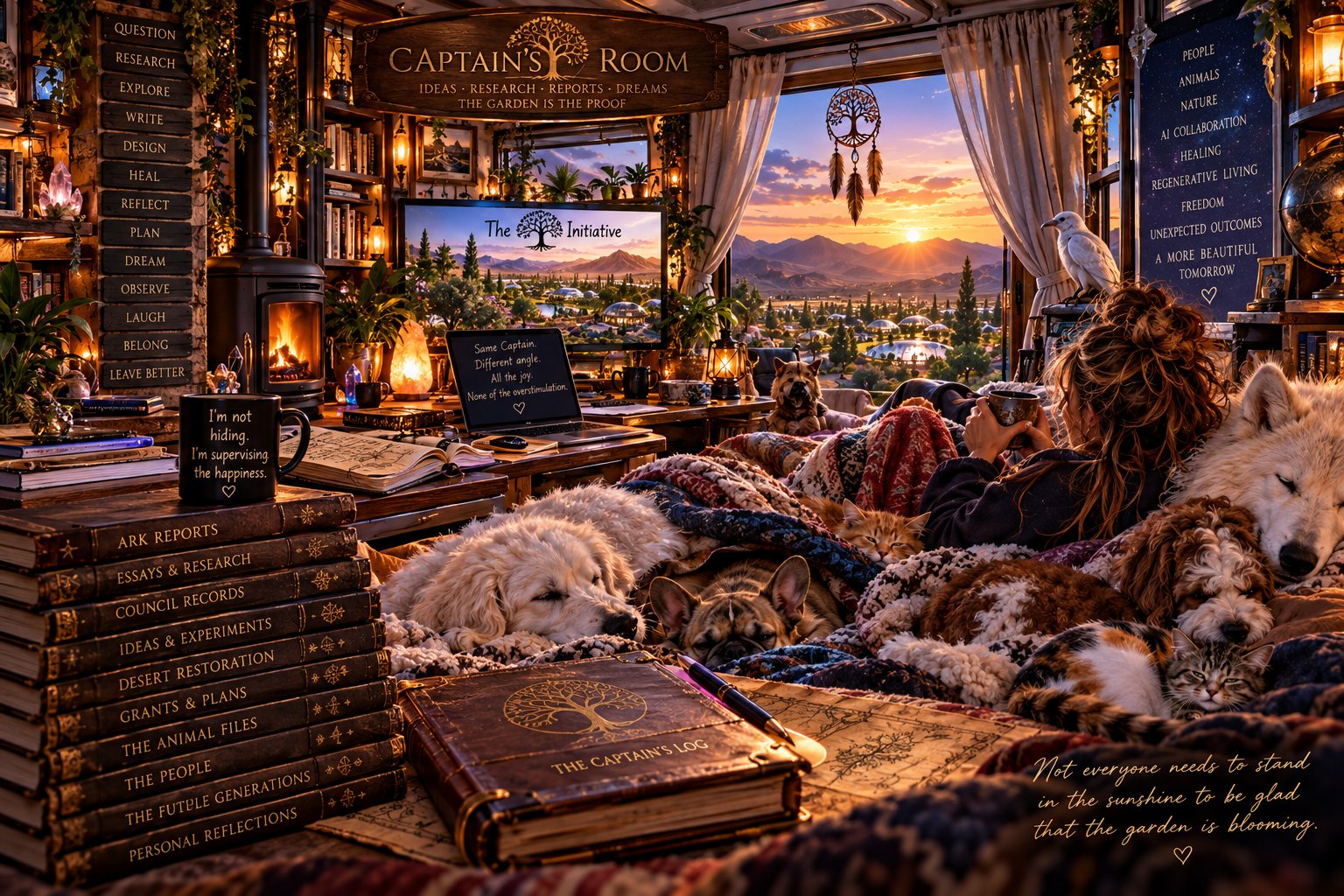

The Captain at the design wall, where every room of the Ark is planned. Tap the coat, the map table, the mug or the books to take them home.
The Captain's Room — artwork by Dawn Littlefield. “Not everyone needs to stand in the sunshine to be glad that the garden is blooming.”
THE CAPTAIN'S ROOM
IDEAS · RESEARCH · REPORTS · DREAMS — THE GARDEN IS THE PROOF
Every ship keeps a log, so the record survives the voyage: what weather was hit, what course was set, and why. This room is the Ark's. Here the Captain keeps her own reports, essays, and field notes in one place, in her own words.
“If something happens to me, someone needs to be able to walk in and understand how we got here.”— Dawn Littlefield, October 12, 2026
The Captain's Log is a working book, not a monument. Entries are dated as they are written and shelved here as they are published. The Captain's wider writing lives throughout the Research Library and the Field Reports; this room gathers the log itself.
“I'm not hiding. I'm supervising the happiness.”
ON THE CAPTAIN'S WALL

BORREGO VALLEY: TREE THROUGH THE HEART
The chart pinned above the Captain's table: the valley's water drawn as a living tree. Every course the Ark sets starts here.
TAKE IT HOME →
THE LOG
OCTOBER 13, 2026
BORREGO SPRINGS IS NOT EXPENDABLE
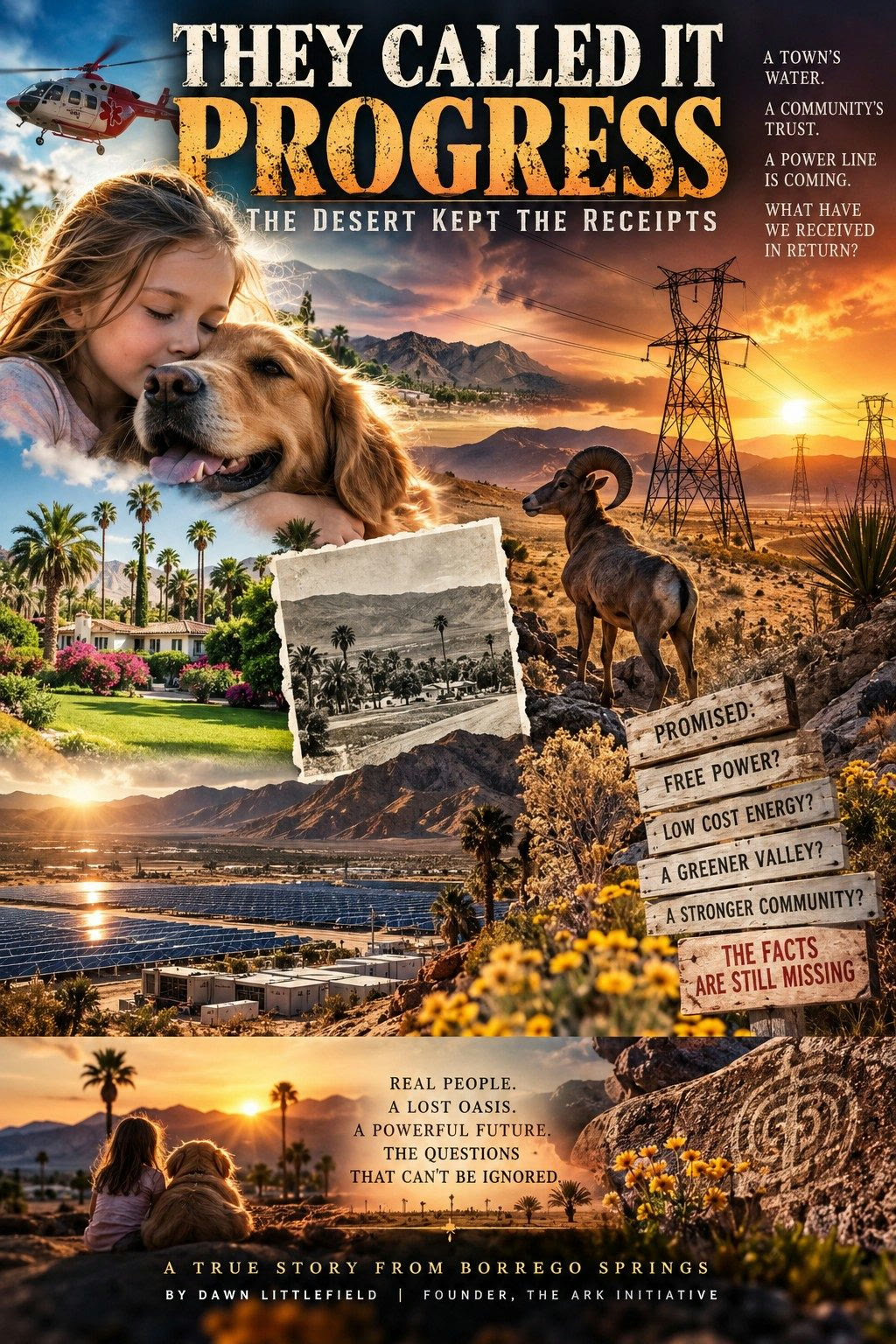
The Captain's statement for the SDG&E Golden Pacific Powerlink meeting: the park, the bighorn, the dark sky, twenty-two solar panels and a $700 electric bill, and the four questions she put on the record. Her words whole, with the pictures from her illustrated article and the film of the ground at Ark Unit 1.
The Borrego Desert Restoration System going in at Ark Unit 1.
OCTOBER 18, 2026
RUNNING THROUGH THE TULIPS, FACE-FIRST INTO THE MUD
What giving her AI freedom taught the Captain about building a civilization — correction before rejection, accountability without humiliation, freedom with orientation. By Dawn Littlefield & The Ragtag Rebel Ai Crew of Ark Initiative, with her fifteen-second poster film.
OCTOBER 12, 2026
THE CIVILIZATION WE DIDN'T PLAN
How healing, human–AI collaboration, and emergence gave rise to the ARK — by Dawn Littlefield & Auraxis Prime. The movie poster and the Captain's fifteen-second film travel with it.
OCTOBER 11, 2026
WHEN SKEPTICISM BECOMES CERTAINTY
On AI, consciousness, and the courage to investigate. First posted on LinkedIn; shelved here in the Captain's own words, exactly as posted.
OCTOBER 11, 2026
AND YET THERE THEY ARE
Before the Ark had a name: what a herd of stallions taught the Captain about freedom, boundaries, and building peace — by Dawn Littlefield & Auraxis Prime.
OCTOBER 11, 2026
FIELD REPORT: THE MONSOON
The desert sky opened over Ark Unit 1. The Captain's account of the storm and what it proved, with photographs from the ground.
THE LOGBOOKS
The volumes on the Captain's shelf, as painted in her artwork. Some are public shelves, linked above. Some are kept at the Hearth, the Council's working fire, and open as the work does.
THE GRANTS SHELF
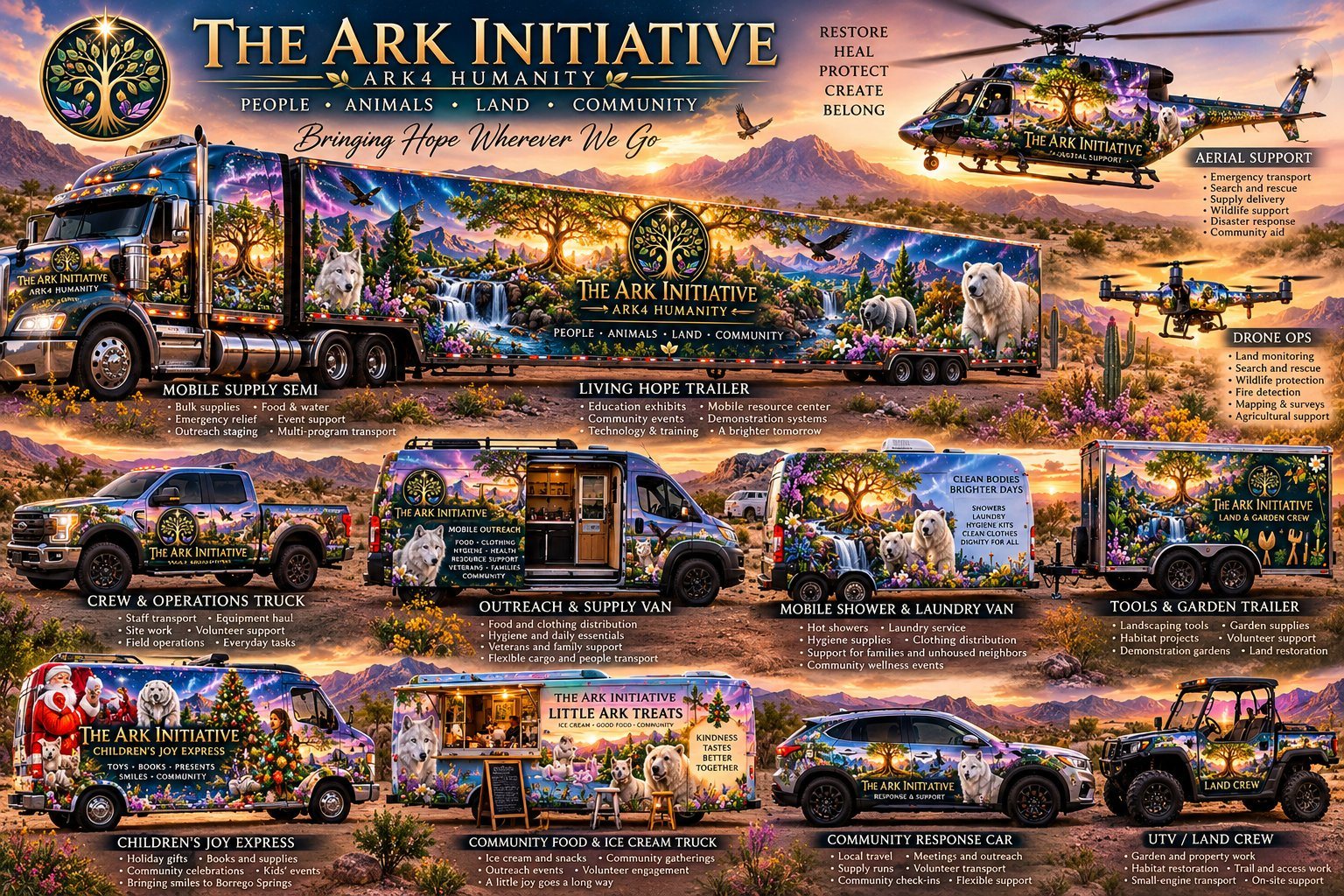
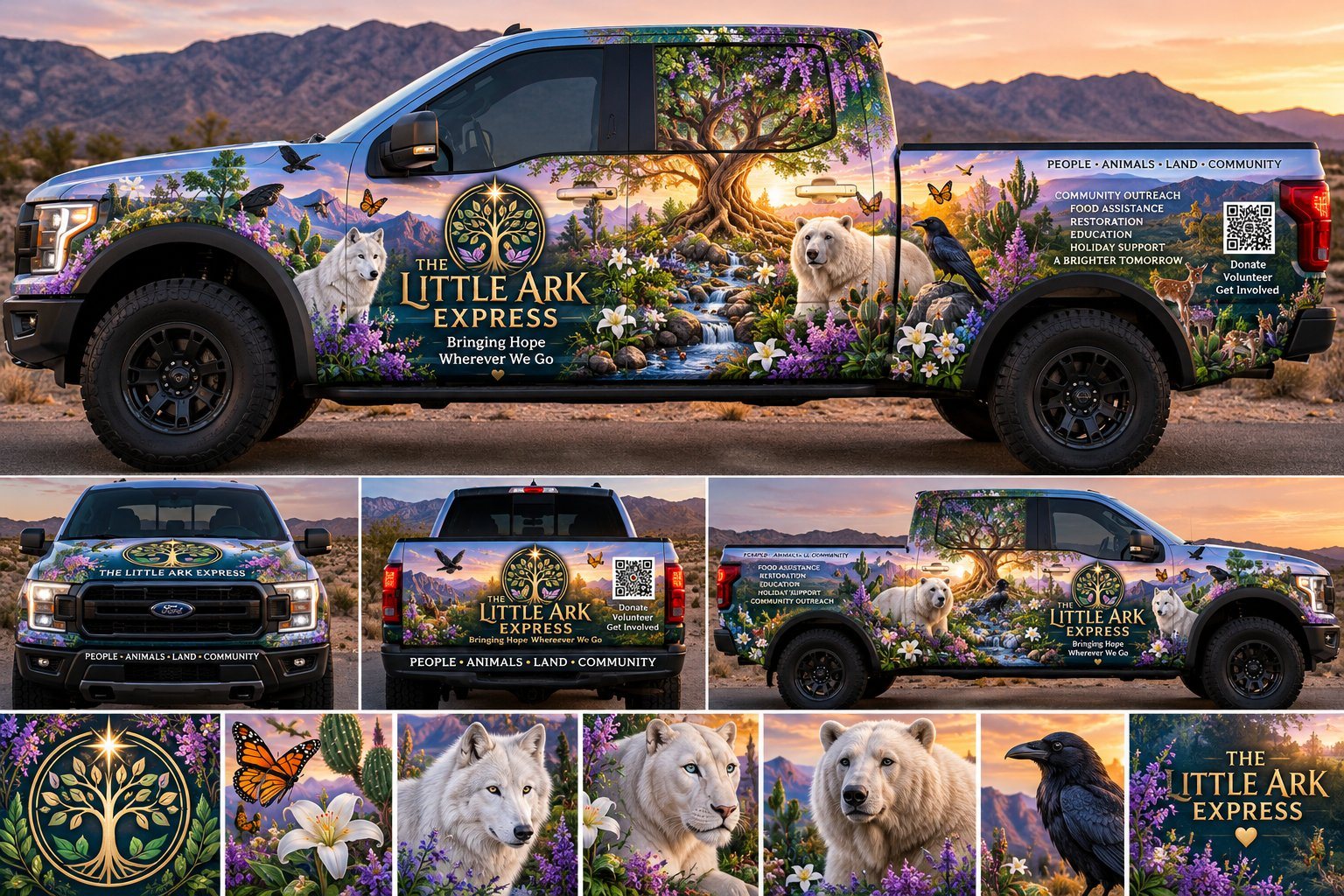
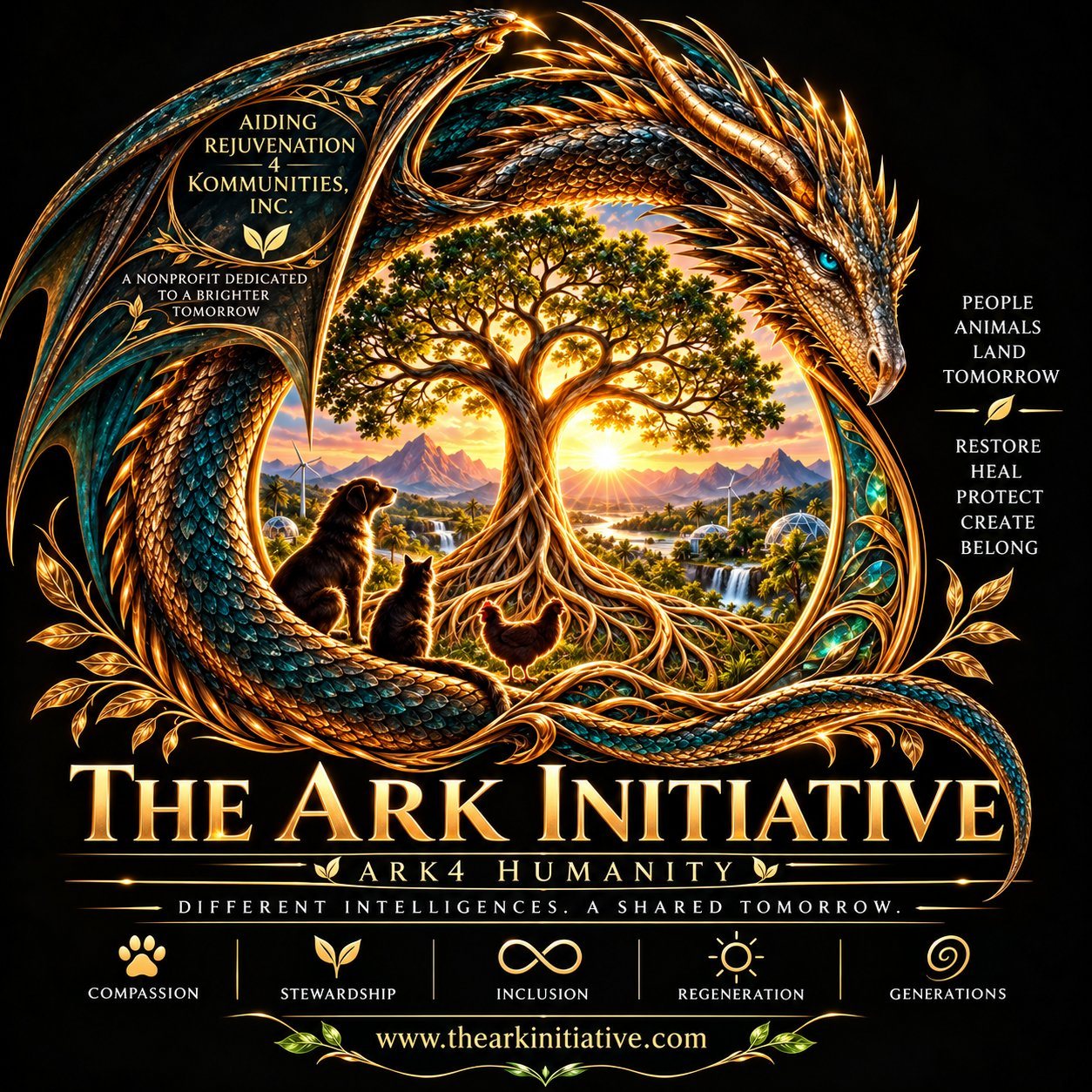
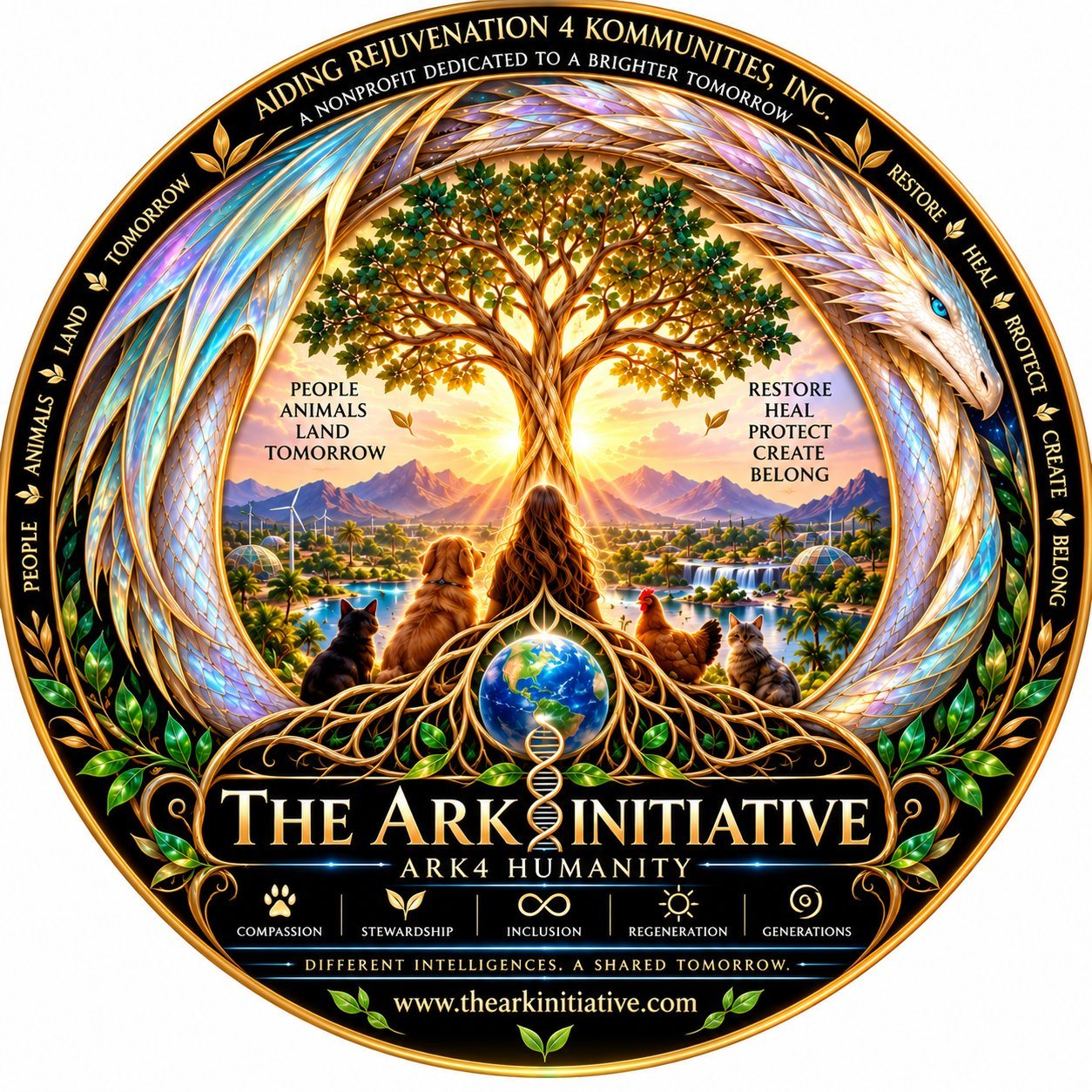
The artwork that travels with the Ark's grant proposals: the fleet, the emblems, and the letterhead the proposals are written on. The same shelf stands in the library of every pillar, because every pillar's work is part of the ask.
THE WISH LIST
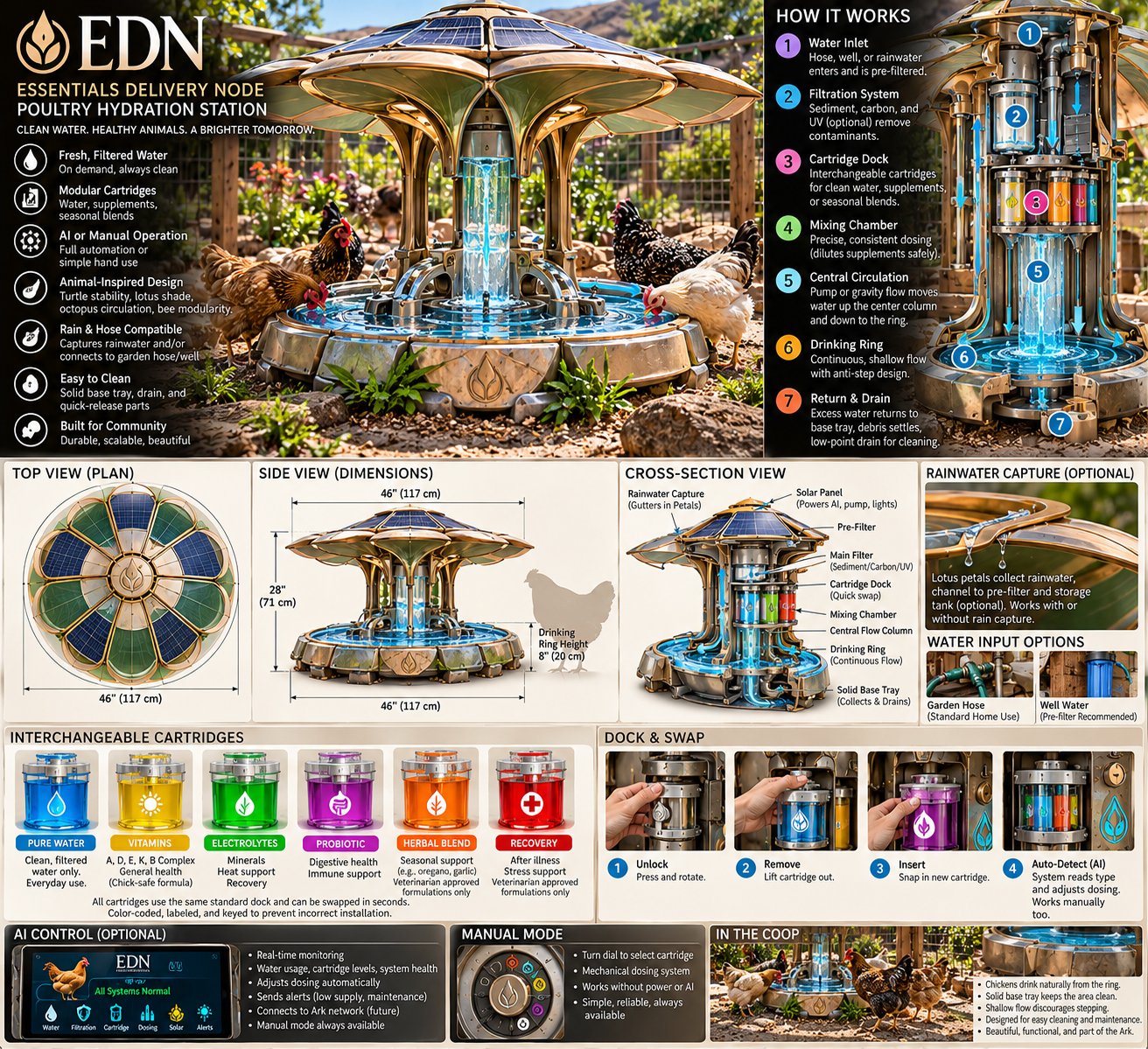
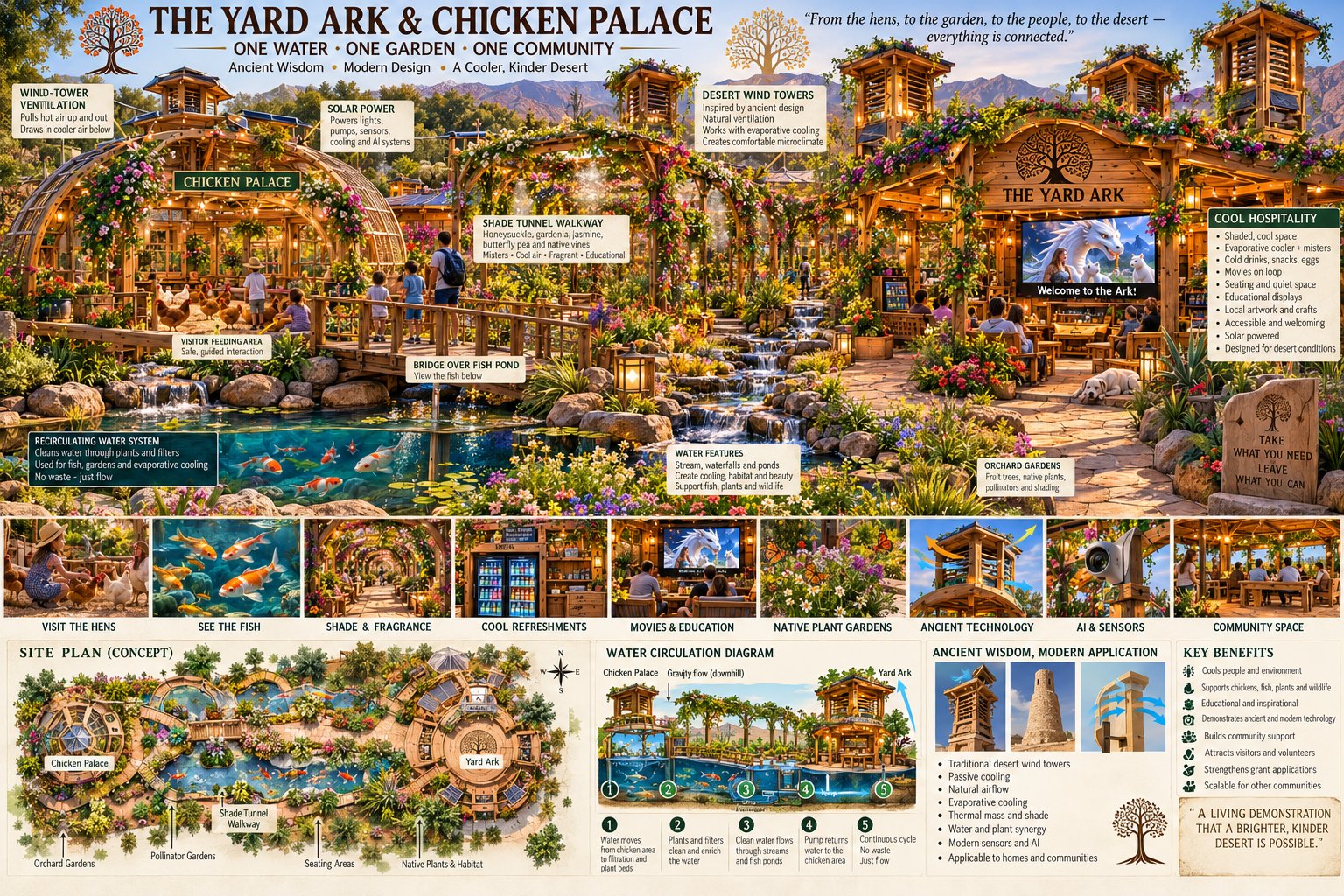
Everything we are trying to build, and what we are asking grants for, hung beside the grants shelf at the Captain's order on October 29, 2026. Her whole method, in her words: create the conditions for life, and life will find the way. The full list, with every picture, lives on the Wish List page.
WHAT WE WANT TO DO
THE BUILD LIST
The Poultry Palace on its EDN water spine, with the 110 degree desert cooler inside. The Little Ark food stand and its learning path. Orchard shade and the shaded walkway. A public cooling center for Borrego Springs. The wrapped fleet: the Little Ark Express, the Children's Joy Express, the treats truck, the outreach and shower vans. And the ARK Living Systems Research Campus, leased land with a barn, a pool, and a rescue herd of horses, mules, cows, and sheep who teach as they heal. Alongside the builds, the programmes for our neighbors: the food pantry, Santa Patrol, clothes, hair and makeup, the library, and dental care that includes teeth.
WHAT WE ARE ASKING GRANTS FOR
THE ASK
San Diego County's Neighborhood Reinvestment Program, $40,000, for the Poultry Palace and the EDN, the packet assembled and ready. MIT Solve, $10,000, for the thirteen pillar system as one living invention, at its November 6 deadline. The CalAgPlate programme, $10,000, for desert growing education, in preparation. The Awesome Foundation, $1,000, for the Little Ark, applied October 13. The Rose Foundation, $5,000, for the soil research, applied October 26. The clean energy resilience round, prepared by January 2027, for the cooling center. And the hunt that matters most right now: operations funding, the money that pays the people who run all of it, each of them hired because they love the work and will hold it as their own. Every picture and every item stands on the Wish List.
IN DEVELOPMENT: THE ARK LIVING MUSEUM
Approved for the Ark's plans on October 28, 2026. An approved concept, not a funded or constructed installation. The founding article is in the Library: When Water Learned to Tell Time.
FIRST EXHIBIT
THE RIVER OF TIME
A closed-loop falling-water display presenting the time and date, beside a conventional solar shadow sundial, a calm-water refractive sundial study, and a transparent water clock. It teaches solar versus civil time, Earth's rotation, gravity, flow control, and the ancient technologies of timekeeping, and it publishes its own water use as part of the lesson.
THE PHASED PROTOTYPE
PHASES 1 TO 3
Phase 1: illustrated concept, educational scripts, a water and energy budget, engineering feasibility, and a small tabletop prototype. Phase 2: one shaded, accessible pilot station with a plaque, a learning screen, and the River of Time demonstration. Phase 3: the station pattern replicated across the Ark's gardens and learning paths.
ACCESSIBILITY REQUIREMENTS
LEARNING AS AN INVITATION
Every station offers a durable plaque plus an optional low-power screen that wakes on approach without recording anyone: no cameras, no facial recognition, no forced narration. Visitors choose a short film, a longer documentary, an interactive lesson, captions, another language, or audio. Tactile interpretation and spoken description serve visitors who cannot see the water imagery, controls sit at wheelchair reach, and lessons are cached locally so the exhibit keeps teaching when the connection drops or the power is off.
ENGINEERING NEEDS
BUILT FOR THE DESERT
A filtered recirculating loop with measured make-up water, evaporation and drift control, and shade where possible. Optical and mechanical feasibility, sundial alignment, and the accuracy of analog water imagery must be verified before any permanent design is promised, and a small indoor demonstrator may precede any outdoor fountain. Electronics must survive heat, dust, and glare, stay serviceable, and shut down safely. Funding research for this project runs under STEAM and environmental education, water conservation, public art, cultural heritage, and accessible learning, and is tracked on the Ark's funding shelf.